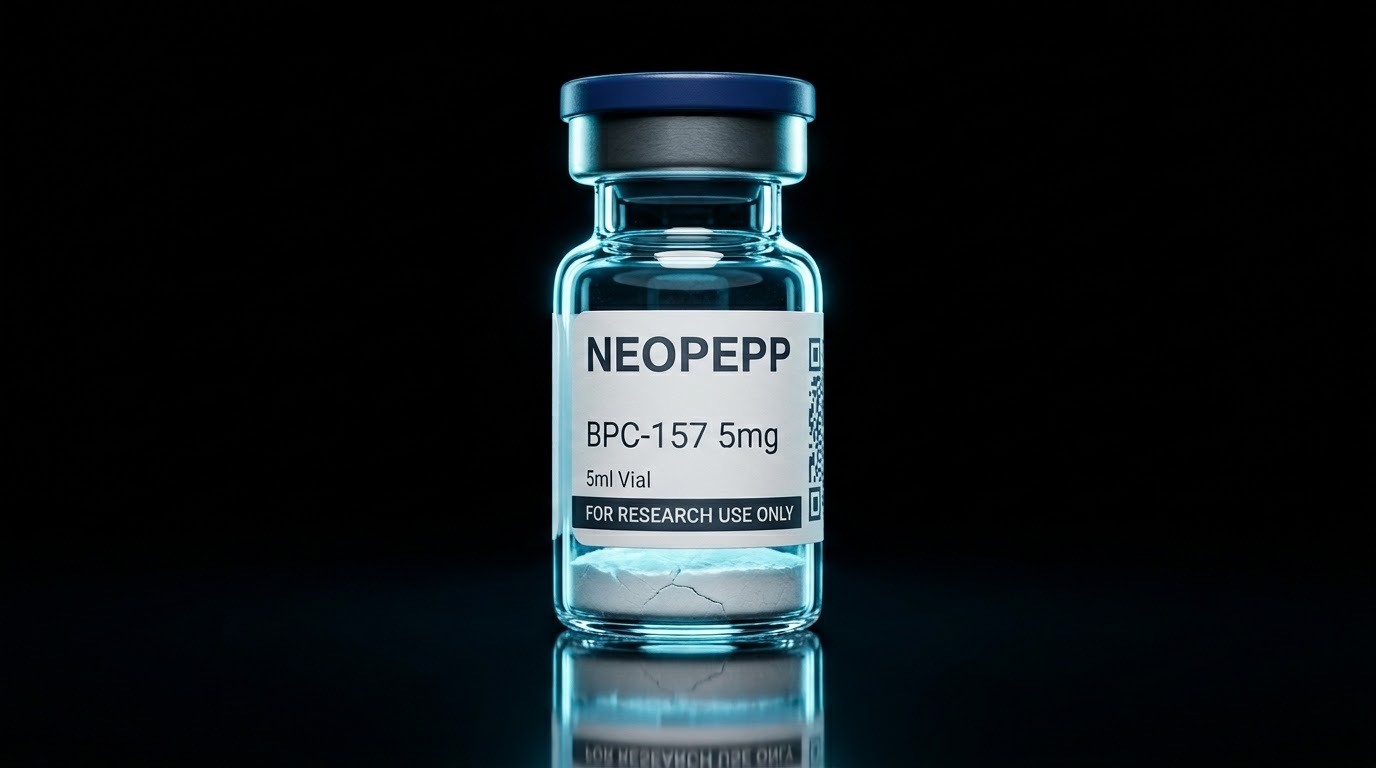
A 15-amino-acid synthetic pentadecapeptide isolated from human gastric juice in the 1990s. This review covers the published peer-reviewed evidence — in vitro studies, animal models, and human clinical status — alongside the analytical standards and regulatory status as of 2026.
THE ORIGIN FRAGMENT: In 1991, an investigative research team at the University of Zagreb isolated a highly specific peptide fragment from human gastric juice. They identified a naturally occurring sequence responsible for maintaining mucosal integrity in highly acidic environments. The synthetic 15-amino-acid replication of this sequence—known as Body Protection Compound-157—is unique in its structural stability, requiring no carrier protein to maintain its sequence integrity in vitro.
PRECLINICAL RESEARCH VECTORS & MECHANISMS The peer-reviewed literature surrounding BPC-157 is extensive, focusing primarily on its interaction with the NO (Nitric Oxide) system and its role in accelerated angiogenesis. The full dossier covers:
Angiogenesis Upregulation: Studies detailing the activation of the VEGFR2 receptor pathway to stimulate new blood vessel formation.
Fibroblast Proliferation: In vitro assays demonstrating the accelerated migration of tendon and ligament fibroblasts.
Mucosal Defense: Literature on its protective mechanisms within gastrointestinal and endothelial cell models.
PROCUREMENT & COMPLIANCE PROTOCOL Strictly synthesized and supplied for in vitro research, analytical characterization, and laboratory mass spectrometry. Not for human use.
[ Request Full 40-Page Dossier ↗ ] | [ Procure for Research ↗ ]